Aliko Dangote, President and Chief Executive Officer of Dangote Industries Limited, has called on Nigeria’s wealthy elite to prioritize local investments as a necessary step toward achieving sustainable national development.
Speaking with select journalists, the billionaire industrialist stated that no nation can achieve long-term economic growth without the deliberate commitment of its wealthy citizens to invest domestically.
He criticized the trend of exporting African wealth to foreign financial institutions, describing it as counterproductive to the continent’s economic progress.
“It is only through such commitment that we can drive true development,” Dangote said. “No nation develops without significant investments. I appeal to all wealthy Nigerians to look inward and invest here, in Nigeria, for the future of our unborn children.”
Dangote also highlighted the contrast between other nations and Nigeria, noting that while corruption exists globally, the key difference lies in the reinvestment of proceeds into domestic infrastructure and enterprise.
“There is hardly any country without corruption, but the difference between there and here is that, in those other corrupt nations, they invest the stolen funds in their country and grow their economy rather than keeping it in foreign banks that will not in any way impact positively on the economy,” he added.
The Dangote Group chairman emphasized that Africa’s long-standing socio-economic challenges—particularly job creation and industrialization—require bold and transformative projects.
He noted that capital flight continues to limit the continent’s capacity to address these challenges effectively.
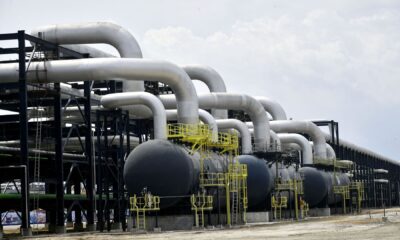
Dangote cited the $20 billion Dangote Refinery project as a direct response to Africa’s dependence on imported refined petroleum products despite its large crude oil reserves.
According to him, most African countries, excluding Algeria and Libya, remain reliant on imports, making the continent vulnerable to external shocks and substandard fuel products.
“Apart from Algeria and Libya, which are self-sufficient, virtually every other African country is an importer,” Dangote said. “Africa has become a dumping ground for substandard petroleum products due to this overreliance on imports.”
He explained that the decision to build the refinery was rooted in the goal of achieving energy independence for Nigeria and contributing to regional self-sufficiency across Africa.
He acknowledged the significant challenges faced during the execution of the project and disclosed that at several points, the group had to choose between abandoning the initiative or pushing through to completion.
“People think building a refinery is like building a house,” he noted. “But, as I always say, if I had known the scale of challenges we would face, I wouldn’t have started at all. We were fortunate as a group because we didn’t fully grasp what we were getting into, but we believed that nothing is impossible.”
Dangote expressed optimism that the refinery will inspire similar investments across the continent and reduce the continued exportation of raw materials without value addition.
He stressed that Africa’s pathway to economic transformation depends on refining raw inputs and developing local manufacturing capabilities.
He concluded by stating that genuine independence must extend beyond political sovereignty to include economic and financial autonomy for African nations and their citizens.
“As long as we keep importing and exporting raw materials, we will remain poor. True independence requires economic self-reliance,” Dangote said.
The Dangote Refinery, when fully operational, is expected to produce 650,000 barrels per day of refined petroleum products and significantly reduce Nigeria’s import bill while supporting foreign exchange stability.