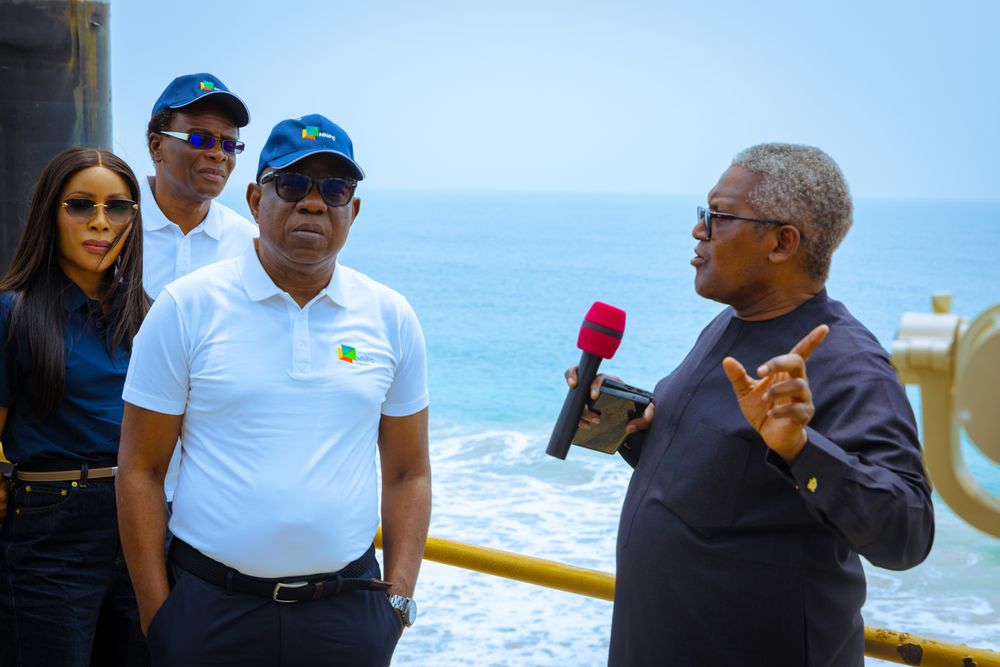
Nigerian billionaire Aliko Dangote and Kenyan President William Ruto are set to break ground on a $16 billion oil refinery in Lamu with the facility designed to process 700,000 barrels of crude oil per day.
The proposed facility is scheduled for completion in 2030, according to details disclosed ahead of Wednesday’s groundbreaking ceremony.
The investment would give Dangote a second large-scale refining operation on the continent following the development of his 650,000-barrel-per-day refinery in Nigeria.
The Kenya project is being positioned to serve a much wider East African market, where countries continue to spend substantial foreign exchange importing refined petroleum products despite the region’s growing energy demand.
Dangote said the broader objective is to increase Africa’s ability to process and supply petroleum products locally rather than continue relying heavily on imports.
Regional governments have been offered a combined 30 percent stake in the proposed refinery, potentially turning the project into a wider East African energy investment rather than an exclusively private Dangote operation.
Demand provides a significant commercial opportunity for the project.
East Africa consumes an estimated 20 million to 30 million metric tonnes of petroleum products annually, according to David Ndii, chief economic adviser to President Ruto.
Industry estimates cited by Reuters indicate that more than one million barrels per day of refining capacity would be required to satisfy the region’s demand.
Refinery Could Create More Than 50,000 Jobs
Beyond fuel production, Kenyan officials expect the Lamu refinery to support the development of associated industries, including petrochemicals and bitumen production.
The project is also expected to generate more than 50,000 jobs, potentially strengthening Lamu’s position as an industrial and energy hub around Kenya’s second deep-water port.
Its development comes as East African economies seek greater protection from international fuel-market disruptions.
Recent geopolitical tensions have pushed up petroleum costs across the region, increasing pressure on governments and consumers while strengthening the economic case for additional refining capacity closer to the markets where the products are consumed.
Crude Supply Remains a Key Question
However, the scale of the proposed refinery creates significant questions around crude oil supply.
Kenya and Uganda have been working towards commercial crude production, but the region does not currently have the established production base required to supply a 700,000-barrel-per-day refinery entirely from local sources.
Energy infrastructure across the region is also less developed than in established refining centres, presenting another challenge as the project moves from groundbreaking towards construction and eventual operation.
The project is also facing a legal challenge in Kenya.
The Kenyan High Court has ordered that portions of the proposed refinery site be preserved pending the hearing of a case brought by local residents.
Environmental and conservation groups have raised concerns about the potential impact of the development on the surrounding area, including ecosystems near Lamu Old Town, a UNESCO World Heritage site.
Dangote has maintained that the groundbreaking will proceed, although the court proceedings could affect activities on parts of the project site.
If completed as planned, the refinery would substantially expand Dangote’s influence in Africa’s petroleum-processing industry and give the group major refining operations serving both West and East African markets.