Connect with us

Economy

Nigeria’s Cement Industry Grows 12.75% as Construction Activity Accelerates

Published

on

cement price

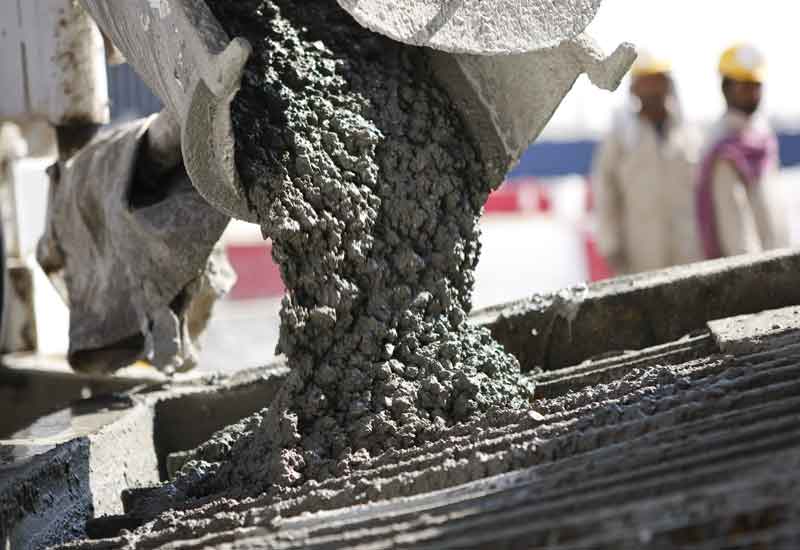
Nigeria’s cement industry expanded by 12.75 percent in real terms in the second quarter of 2026 as stronger construction activity supported one of the fastest-growing segments of the country’s manufacturing sector.

The latest National Bureau of Statistics GDP report showed that cement growth accelerated sharply from 4.86 percent in Q2 2025 and remained in double digits after expanding 11.53 percent in Q1 2026.

At constant 2019 prices, real cement output increased to approximately N573.70 billion in Q2 2026 from N508.85 billion in the corresponding period of 2025.

This means the industry generated about N64.86 billion in additional inflation-adjusted output within one year.

The expansion was significantly faster than Nigeria’s overall economic growth of 4.43 percent during the quarter and the 3.24 percent growth recorded by the manufacturing sector.

Cement was also one of the strongest-performing manufacturing activities during the period.

Oil refining recorded the highest percentage increase at 43.94 percent, although it operated from a considerably smaller economic base, while chemical and pharmaceutical products expanded 7.70 percent.

Food, beverage and tobacco grew 2.79 percent, wood and wood products expanded 3.33 percent, while textiles, apparel and footwear contracted 1.23 percent.

The cement industry’s performance coincided with an acceleration in Nigeria’s construction sector.

Construction expanded by 6.75 percent in real terms in Q2 2026, compared with 5.27 percent in Q2 2025 and 6.38 percent in Q1 2026.

At constant prices, construction output increased from approximately N1.85 trillion in Q2 2025 to N1.97 trillion in Q2 2026.

That represents an increase of about N124.64 billion in real construction activity over the one-year period.

Together, the numbers show simultaneous expansion in the production of cement and the economic activity associated with construction.

Cement production grew almost twice as fast as construction, with the two activities adding a combined N189.49 billion in real output compared with their respective levels in Q2 2025.

The NBS data, however, do not establish that the increase in construction directly caused the growth in cement production. They show that both activities expanded strongly during the same period.

Cement Outpaces Manufacturing Sector

The 12.75 percent growth recorded by cement also highlights the uneven performance within Nigerian manufacturing.

Overall manufacturing expanded by 3.24 percent in Q2, improving considerably from 1.60 percent a year earlier but remaining slightly below the 3.29 percent recorded in the first quarter.

Cement therefore grew at almost four times the rate of the broader manufacturing sector.

The industry also strengthened its contribution to manufacturing output while other major manufacturing activities recorded much slower growth or contracted.

Textile, apparel and footwear declined 1.23 percent, while motor vehicles and assembly contracted 1.02 percent.

By contrast, cement has now recorded double-digit real growth in both quarters of 2026, expanding 11.53 percent in Q1 before accelerating to 12.75 percent in Q2.

Construction Adds N124.6bn in Real Output

Construction remained substantially larger than cement in absolute economic output.

Its N1.97 trillion in real output during Q2 was more than three times the N573.70 billion generated by cement manufacturing.

The sector accounted for approximately 3.68 percent of Nigeria’s real GDP during the quarter.

Construction’s 6.75 percent expansion also exceeded the growth rates recorded by several major economic activities, including agriculture at 4.39 percent, manufacturing at 3.24 percent, trade at 2.40 percent and real estate at 3.76 percent.

Both cement and construction consequently grew faster than Nigeria’s overall GDP rate of 4.43 percent.

The broader economy expanded to N53.47 trillion at constant 2019 prices in Q2 2026 from N51.20 trillion a year earlier, adding approximately N2.27 trillion in real output.

The NBS identified cement manufacturing and construction among the activities supporting growth in Nigeria’s non-oil economy, which expanded 4.31 percent during the quarter and accounted for 95.84 percent of real GDP.

The latest figures show that cement was one of the standout manufacturing activities in the second quarter, with real production increasing by nearly N65 billion while construction added another N124.6 billion in inflation-adjusted output.

The GDP report does not attribute the expansion to individual cement producers, infrastructure projects or government programmes. What the data establish is that Nigeria recorded simultaneous double-digit growth in cement production and accelerating construction activity during the second quarter of 2026.

is the CEO and Founder of Investors King Limited. He is a seasoned foreign exchange research analyst with over 20 years of experience in global financial markets. Olukoya is a published contributor to Yahoo Finance, Business Insider, Nasdaq, Entrepreneur.com, InvestorPlace, and other leading financial platforms. He is widely recognized for his in-depth market analysis, macroeconomic insights, and commitment to financial literacy across emerging economies.

Advertisement
Advertisement