Connect with us

Crude Oil

Brent Crude Oil Adds $5.34 Per Barrel as US-Iran Fighting Revives Supply Fears

Published

on

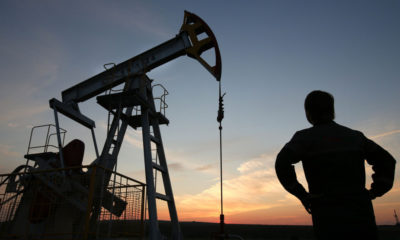
Brent crude oil - Investors King

Brent crude oil gained $5.34 per barrel in two trading sessions as renewed fighting between the United States and Iran revived concerns over oil supply from the Middle East and pushed the global benchmark to a five-week high.

Brent settled at $94.65 per barrel on Tuesday, up $4.16, or 4.6 percent during the session. Combined with Monday’s advance, the benchmark has risen from $89.31 per barrel at the end of last week, representing a gain of approximately 5.98 percent.

U.S. West Texas Intermediate crude also strengthened sharply, rising $4.46, or 5.2 percent on Tuesday to settle at $90.22 per barrel.

The gains took Brent to its highest closing level since July 24 and WTI to its strongest close since July 23, underscoring how quickly geopolitical risk has returned to oil pricing.

Crude prices had already moved higher after the first direct exchange of attacks between the United States and Iran since July before another round of U.S. strikes intensified concerns that the conflict could once again disrupt energy movements through the region.

U.S. Central Command said American forces carried out strikes against Islamic Revolutionary Guard Corps targets after attempted attacks against commercial shipping in the Strait of Hormuz and U.S. military personnel in the region.

Iran subsequently retaliated against U.S. assets across the Middle East, marking the most significant exchange of fire between Washington and Tehran in weeks.

The renewed confrontation has refocused the oil market on the Strait of Hormuz, where disruptions have already restricted the movement of energy supplies during the six-month conflict.

Before the war, the strategic waterway handled about one-fifth of global oil consumption, making any sustained disruption capable of removing significant volumes from international markets.

Shipping risks have also increased following attacks on vessels using the waterway.

Two supertankers carrying Saudi crude were struck by unidentified projectiles while travelling out of Hormuz on Monday. Each vessel had loaded about 2 million barrels, putting approximately 4 million barrels of Saudi crude aboard the two tankers when the incidents occurred. Crew members were reported safe.

Iran’s Revolutionary Guard also said on Wednesday that two oil tankers had been disabled after hitting sea mines while attempting to transit Hormuz, adding to concerns over the security of commercial energy shipments.

Despite the security risks, crude continues to move through the waterway.

U.S. Energy Secretary Chris Wright said 17 million barrels of oil crossed the Strait of Hormuz on Monday, the highest daily volume reported since the Iran war reduced flows through the route.

The continued movement of crude has so far prevented fears of disruption from developing into a complete supply stoppage, leaving traders to balance improving oil flows against the possibility of another escalation.

That uncertainty was reflected in Wednesday’s trading.

Brent climbed as high as $97.04 per barrel, while WTI touched $92.29, their highest intraday levels since July 24, before both benchmarks surrendered most of the early gains.

By 0949 GMT, Brent was trading around $94.76 per barrel, up 11 cents, while WTI was almost unchanged at $90.26.

The retreat from the session highs suggests the market remains highly sensitive to developments around Hormuz rather than pricing in an immediate loss of large volumes of crude.

Oil traders are effectively confronting two competing forces: substantial quantities of crude are still reaching the market, but renewed military action means those flows could be interrupted quickly.

Capital Economics said further escalation accompanied by greater disruption to Middle Eastern shipping could push Brent beyond $100 per barrel.

Supply concerns are also extending beyond crude.

U.S. diesel futures reached their highest level in 52 months on Tuesday after climbing about 51 percent over the previous 10 weeks, while the diesel crack spread, a measure of refining margins, reached a record of around $107 per barrel, according to LSEG data cited by Reuters.

Russia has added another layer of uncertainty to global energy markets, with attacks affecting energy infrastructure as its war with Ukraine continues. Russia remains one of the world’s largest crude producers and a member of OPEC+.

The latest $5.34 two-session increase in Brent therefore reflects more than another short-term movement in crude prices.

It shows that geopolitical risk is once again being rapidly incorporated into the cost of oil as traders assess whether the renewed U.S.-Iran confrontation will further restrict supplies from one of the world’s most important producing regions.

is the CEO and Founder of Investors King Limited. He is a seasoned foreign exchange research analyst with over 20 years of experience in global financial markets. Olukoya is a published contributor to Yahoo Finance, Business Insider, Nasdaq, Entrepreneur.com, InvestorPlace, and other leading financial platforms. He is widely recognized for his in-depth market analysis, macroeconomic insights, and commitment to financial literacy across emerging economies.

Comments
Advertisement
Advertisement