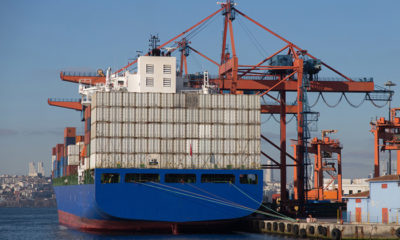
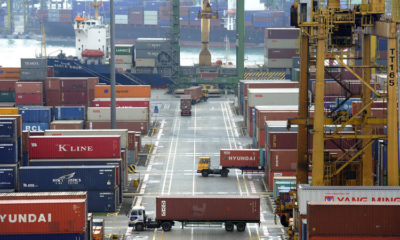
Zenith Bank Plc has outlined strategies to accelerate Nigeria’s non-oil export growth with increased local processing, stronger trade financing and improved access to African and global markets identified as critical to extracting more value from the sector.
The lender made the push at the 10th edition of its International Trade Seminar on Non-Oil Export, held virtually on Tuesday, August 25, 2026, as policymakers, regulators, exporters, manufacturers and investors examined ways to strengthen Nigeria’s export economy.
Nigeria’s non-oil exports rose to a record $6.1 billion in 2025, representing an 11.5 percent increase from $5.46 billion in 2024 and a significant expansion from $612 million recorded about a decade earlier.
Speaking at the seminar, Group Managing Director and Chief Executive Officer of Zenith Bank, Dame Adaora Umeoji, said Nigeria must build on the improvement by increasing the amount of value created locally before products are exported.
Umeoji said the focus should increasingly shift from the shipment of raw commodities towards processed and finished products capable of generating higher foreign exchange earnings, creating jobs and strengthening domestic industries.
She noted that Zenith Bank has continued to support exporters through financing and initiatives aimed at improving cross-border trade.
According to her, the bank is working with the African Continental Free Trade Area Secretariat on the development of the SMARTAfCFTA portal while its integration with the Pan-African Payment and Settlement System is expected to make transactions across African markets easier for customers.
“Our theme, ‘Unlocking Value and Harnessing Growth’, is not just a slogan. It speaks to the opportunities before us and the need to translate our collective efforts into sustainable economic value,” Umeoji said.
She also highlighted recent economic and foreign exchange reforms, saying improved stability could provide a stronger foundation for businesses seeking to expand production and exports.
Minister of Industry, Trade and Investment, Dr. Jumoke Oduwole, said Nigeria’s export strategy must go beyond simply increasing shipment volumes to ensuring that a larger share of the economic value generated from exports remains within the country.
Oduwole said improving domestic production, processing capacity, infrastructure and access to finance would be essential to helping Nigerian companies compete effectively in international markets.
She pointed to the AfCFTA as a major opportunity for Nigerian businesses, with the African market comprising more than 1.4 billion people and approximately $3.4 trillion in gross domestic product.
Nigeria, she said, must position its businesses to take advantage of regional value chains and emerging digital trade opportunities.
The Chair of the Board of Directors of the Fund for Export Development in Africa and immediate past President of Afreximbank, Professor Benedict Oramah, said changing global economic conditions provided Africa with an opportunity to strengthen its internal markets and reduce dependence on external capital and demand.
Oramah said Nigeria and other African economies would need to expand their capacity to finance domestic industries and trade while developing stronger regional supply chains.
Founder and Executive Chair of Plot Enterprise Ghana Limited, Patricia Poku-Diaby, also stressed the importance of processing commodities before export.
She said Africa’s long-term economic prospects would increasingly depend on its ability to transform agricultural and mineral resources into manufactured goods and globally competitive brands rather than remaining primarily a supplier of raw materials.
The United Kingdom also identified value addition as an important area for expanding its trade relationship with Nigeria.
Representing UK Minister of State Florence Eshalomi, Head of Trade Policy for UK Business, Innovation, Science and Trade, Mujina Kaindama, said Nigerian businesses could generate greater returns by moving further up global value chains through processing, manufacturing and branding.
AfCFTA Secretary-General Wamkele Mene said the private sector would determine the success of efforts to restructure Africa’s economies.
According to Mene, the effectiveness of the continental free trade agreement would ultimately be measured by the ability of African companies to enter new markets, increase investment, expand productive capacity and create jobs.
Discussions during the seminar also focused on customs efficiency, port operations, export financing, product certification, logistics, market intelligence and barriers preventing Nigerian businesses from competing effectively abroad.
Zenith Bank launched its International Trade Seminar on Non-Oil Export in 2015 as a platform connecting regulators, financial institutions and businesses involved in Nigeria’s export sector.
The 2026 edition attracted participants from 97 countries through digital platforms including Zoom, YouTube, Instagram, Facebook, X and TikTok.
With Nigeria seeking to reduce its dependence on crude oil revenues, stakeholders at the seminar said sustained growth in non-oil exports would depend increasingly on the country’s ability to manufacture and process more of what it currently exports in raw form while providing businesses with the financing and infrastructure required to reach larger markets.