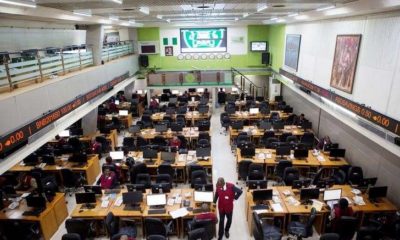
The Nigerian stock market closed the week ended May 29, 2026 on a marginally positive note as the All-Share Index (ASI) advanced by 0.27 percent to settle at 250,385.47 points, up from 249,712.37 recorded the previous week. Market capitalisation also increased to ₦160.51 trillion.
However, despite the positive close, underlying market indicators reveal a fragile structure marked by weak liquidity, sustained selling pressure and cautious investor positioning.
Trading Activity Declines as Market Operates for Three Sessions
Trading activity weakened during the week, which was shortened to three trading days due to the Eid el Adha public holidays declared on May 27 and May 28.
A total of 2.398 billion shares valued at ₦111.48 billion were traded in 241,313 deals, compared to 3.875 billion shares worth ₦161.76 billion recorded in the previous week.
The decline in both volume and value signals reduced market participation and waning investor confidence, reinforcing the cautious tone observed in recent sessions.
Financial Services Sector Dominates Activity
The Financial Services sector maintained its dominance, accounting for 69.07 percent of total volume and 43.26 percent of total value traded during the week.
Key drivers of activity included:
- Fidelity Bank Plc
- Access Holdings Plc
- The Initiates Plc
These three equities alone accounted for 37.69 percent of total volume traded, underscoring the concentration of liquidity in a few highly traded names.
Market Breadth Remains Negative
Market breadth weakened further as declining stocks outpaced gainers:
- 34 equities advanced
- 51 equities declined
- 61 equities remained unchanged
This negative breadth confirms that the weekly gain in the index was not broad-based, but rather driven by selective price movements in a few stocks.
Top Gainers Led by Insurance and Mid-Tier Stocks
Gains were largely concentrated in insurance and mid-cap stocks, including:
- International Energy Insurance Plc (+32.55%)
- Sovereign Trust Insurance Plc (+20.61%)
- Tantalizers Plc (+18.40%)
- Airtel Africa Plc (+10.00%)
While the presence of Airtel Africa Plc among top gainers provided support to the index, most advances were driven by smaller-cap and speculative stocks, reflecting short-term trading rather than long-term investment flows.
Heavy Losses in Key Large-Cap and Banking Stocks
The market recorded significant losses in major stocks, highlighting persistent selling pressure:
- Dangote Sugar Refinery Plc declined 18.22%
- Transcorp Power Plc fell 9.97%
- Fidelity Bank Plc dropped 9.79%
The decline in large-cap and banking stocks signals institutional distribution rather than isolated profit-taking, weakening overall market stability.
Sectoral Indices Reflect Weak Underlying Structure
Despite the marginal gain in the ASI, several key sectoral indices closed lower:
- NGX Banking Index declined 2.43%
- NGX Consumer Goods Index fell 1.52%
- NGX AFR Dividend Yield Index dropped 5.25%
The divergence between the headline index and sectoral performance indicates that core market segments remain under pressure.
ETF and Bond Markets Show Defensive Positioning
The ETF segment recorded lower activity compared to the previous week, with 4.69 million units traded valued at ₦569.77 million.
Meanwhile, bond market activity also declined slightly, but continued to attract cautious capital flows as investors maintained defensive positioning.
Market Interpretation
The week’s performance reflects a mixed but structurally weak market environment:
- Index gains were marginal and selective
- Liquidity declined significantly
- Selling pressure persisted in large-cap stocks
- Market breadth remained negative
- Investors adopted cautious and defensive strategies
Market Phase
The Nigerian stock market is currently in a:
Transition Phase Within a Broader Distribution Trend
- The market is not in a confirmed recovery
- Selling pressure remains active across key sectors
- Institutional participation appears cautious and selective
Outlook
In the near term, the market is likely to experience:
- Continued volatility
- Weak and inconsistent rallies
- Selective buying in defensive or high-liquidity stocks
A sustainable recovery will depend on:
- Stronger liquidity inflows
- Broad-based participation
- Stabilisation in large-cap and banking stocks
Investors King Note
Although the market recorded a modest weekly gain, underlying indicators point to persistent structural weakness and cautious investor sentiment.
The divergence between the ASI and broader market performance suggests that the current environment remains fragile, with downside risks still present.