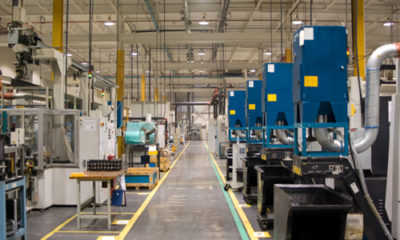
The Federal Government has introduced a new industrial policy framework aimed at revitalising Nigeria’s manufacturing sector and repositioning the country as a competitive production hub.
The policy outlines strategic measures to stimulate factory output, strengthen domestic value chains and improve access to long-term industrial financing.
The initiative targets underutilised production capacity across key industries, including agro-processing, textiles, pharmaceuticals, steel and light manufacturing.
By addressing structural bottlenecks such as infrastructure deficits, high energy costs and limited access to credit, authorities aim to improve productivity and reduce reliance on imports.
Central to the policy is a renewed focus on expanding industrial financing through development institutions.
Plans include recapitalisation support and targeted funding mechanisms designed to provide affordable credit to manufacturers, particularly small and medium-scale operators seeking to scale operations.
Officials believe improved access to capital will unlock stalled projects and accelerate new investments.
Energy reliability and logistics efficiency also form part of the reform agenda. Manufacturing operators have consistently cited power instability and transportation constraints as major cost drivers.
The new policy framework proposes coordinated infrastructure improvements and sector-specific interventions to enhance operational efficiency and lower production expenses.
The government is also prioritising local content development to reduce foreign exchange pressure. By encouraging domestic production of intermediate goods and raw materials, policymakers aim to conserve external reserves and strengthen Nigeria’s trade balance.
Increased local manufacturing capacity is expected to reduce import dependence in critical sectors.
Industry stakeholders view the move as a necessary step toward economic diversification. Manufacturing contributes significantly to employment generation and value addition, yet its share of gross domestic product has remained constrained by structural challenges.
A more coordinated industrial strategy could improve competitiveness and attract both domestic and foreign direct investment.
Investors are closely monitoring implementation details, particularly timelines, funding structures and regulatory adjustments.
Analysts note that policy consistency and transparent execution will determine whether the initiative delivers measurable impact on industrial output and capacity utilisation.
The unveiling of the industrial policy comes amid broader economic reforms aimed at restoring macroeconomic stability.
Strengthening the manufacturing base is expected to support inclusive growth, expand export potential and improve resilience against external shocks.
As Nigeria seeks to transition toward a more production-driven economy, the effectiveness of the new industrial framework will play a central role in shaping medium-term growth prospects.
Market participants will assess early indicators, including factory output levels and capital inflows, to gauge the policy’s impact on the manufacturing landscape.