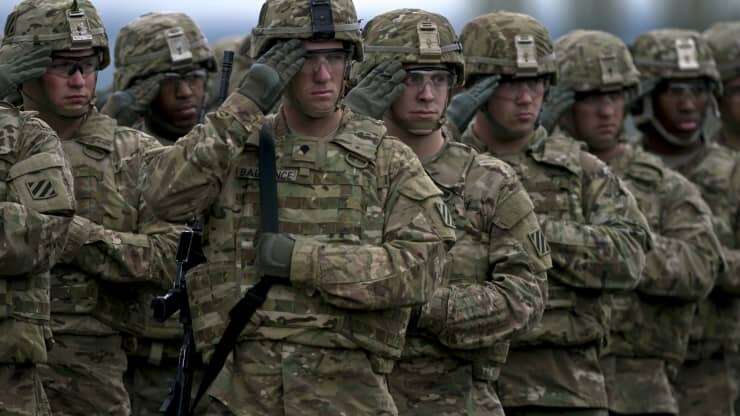
United States Africa Command (AFRICOM) has confirmed that U.S. forces are now operating on the ground in Nigeria.
The confirmation was made on Tuesday by General Dagvin R. M. Anderson, commander of AFRICOM, during a press briefing, where he said a small U.S. team had been deployed after both countries agreed that enhanced cooperation was required to address escalating terrorist threats in West Africa.
Anderson said the deployment reflects “increased collaboration” between the United States and Nigeria and brings “unique capabilities” to support counterterrorism efforts, without disclosing the size or scope of the mission.
The disclosure follows U.S. airstrikes carried out on Christmas Day, which President Donald Trump said targeted Islamic State elements in Nigeria. Trump has since indicated that additional military action could follow if security conditions deteriorate.
AFRICOM later said the strike was conducted in coordination with Nigerian authorities in Sokoto State and resulted in the deaths of multiple ISIS militants.
Nigeria’s Defence Minister, Christopher Musa, confirmed that a U.S. team is currently working in the country but declined to provide further operational details.
A former U.S. official familiar with the deployment said the team is primarily involved in intelligence gathering and operational enablement, aimed at improving Nigerian forces’ capacity to target terrorist-affiliated groups.
The U.S. deployment comes amid heightened pressure from Washington over security conditions in Nigeria’s northwest, where Islamist militants have intensified attacks on civilians and military convoys.
Trump has publicly accused Nigeria of failing to protect Christian communities from militant violence, a claim the Nigerian government has rejected, stating that security operations target armed groups attacking both Christian and Muslim civilians.
Militant groups including Boko Haram and the Islamic State West Africa Province have increased the tempo of operations across parts of northern Nigeria, with the northwest now described by security officials as a key front in the 17-year insurgency.
AFRICOM said the latest deployment is part of a broader effort to degrade terrorist networks, improve intelligence-sharing, and support partner-led operations rather than establish a large or permanent U.S. military footprint. The command stressed that cooperation with Nigerian authorities remains central to all activities.
As the security situation evolves, analysts expect closer scrutiny of the scope of U.S. involvement, the duration of the deployment, and its implications for Nigeria’s counterterrorism strategy and broader U.S.–Nigeria security relations.