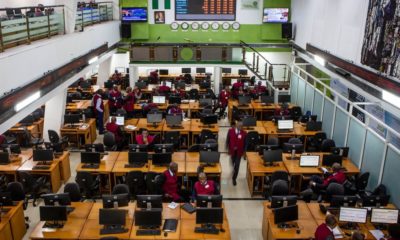
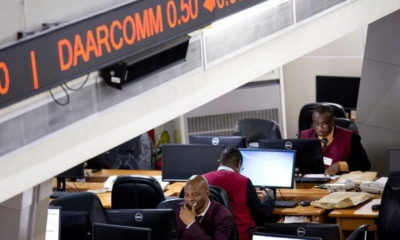
The Nigerian Exchange (NGX) closed lower on Thursday as profit-taking across equities dragged the market into negative territory, snapping the three-day rally recorded earlier in the week.
The All-Share Index (ASI) declined by 0.43 percent to 166,057.29 points, down from 166,771.95 points on January 14, reflecting a cautious shift in investor sentiment after consecutive gains.
Market Capitalisation Retreats
Equity market capitalisation fell to ₦106.32 trillion, compared with ₦106.78 trillion in the previous session, representing a ₦457 billion decline.
-
Equity Market Cap: ₦106.32 trillion vs ₦106.78 trillion
-
Bond Market Cap: ₦51.56 trillion vs ₦51.55 trillion
-
ETF Market Cap: ₦66.84 billion vs ₦62.63 billion
While equities weakened, ETF capitalisation continued to expand, indicating ongoing institutional accumulation despite the broader market pullback.
Trading Activity Strengthens Despite Market Decline
Trading activity remained robust, with both volume and value increasing compared with Wednesday’s session.
-
Volume Traded: 1.03 billion shares vs 761.94 million shares
-
Value Traded: ₦31.59 billion vs ₦29.85 billion
-
Deals Executed: 51,227 vs 55,751
The data points to active repositioning by investors rather than broad market exit.
Nestlé, Jaiz Bank Lead Gainers
Despite the overall market decline, several stocks recorded strong gains.
-
Nestlé Nigeria advanced 10 percent to close at ₦2,153.80, emerging as the session’s most significant large-cap gainer.
-
NCR extended its rally with a 9.97 percent gain.
-
Jaiz Bank rose 9.92 percent, while Morison Industries also posted a strong advance.
-
FGS UK 2031 S4 bond recorded an 11.11 percent price increase.
The gains reflect selective buying in fundamentally strong and income-generating instruments.
Profit-Taking Weighs on Mid-Cap Stocks
Sell pressure intensified in several mid-cap and consumer-related stocks.
-
McNichols led the decliners with a 9.99 percent drop.
-
Caverton Offshore, Ikeja Hotel, FTN Cocoa, and Neimeth Pharmaceuticals also closed sharply lower.
The pullback followed strong gains recorded in previous sessions, confirming increased profit-taking.
Zenith Bank Dominates Trading by Value
Trading activity remained concentrated in financial services.
-
Sovereign Trust Insurance led by volume with 245.18 million shares.
-
Zenith Bank topped the value chart with ₦5.03 billion worth of trades.
-
Access Holdings and Jaiz Bank also recorded heavy turnover, underscoring sustained liquidity in banking stocks.
Bonds Mixed, ETFs Extend Rally
The fixed-income market recorded sharp movement in select issues.
Exchange-traded funds extended gains for a fourth consecutive session.
SIAMLETF40, Stanbic ETF30, MERGROWTH, MERVALUE, and VETGRIF30 all closed higher, pushing ETF market capitalisation to ₦66.84 billion, its highest level in the week.
Market Outlook
The January 15 session reflects a healthy market correction following a strong three-day rally. While equities faced profit-taking, rising trade value, strong ETF inflows, and selective large-cap buying indicate that underlying market interest remains intact.
With equity market capitalisation still above ₦106 trillion, investor focus is expected to remain on fundamentally strong stocks, banking names, and ETFs offering diversified exposure as the market navigates near-term consolidation.