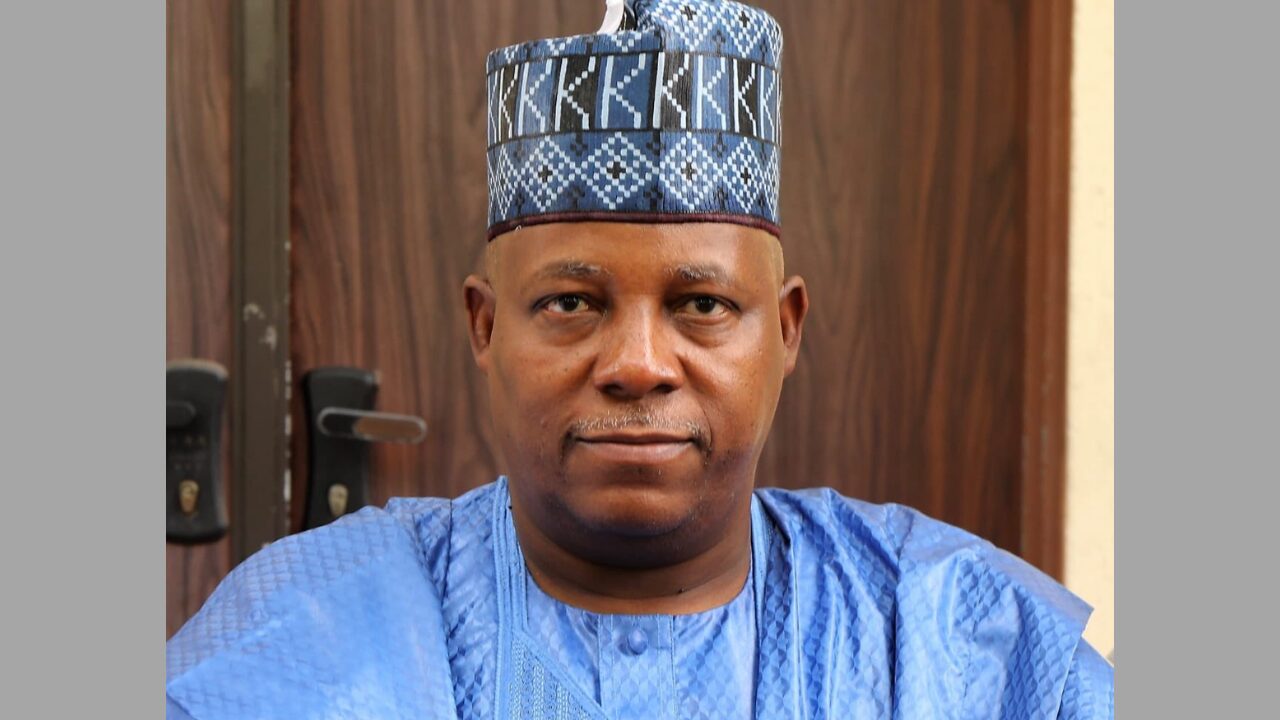
Nigeria is positioning itself as a continental hub for renewable-energy innovation, with an estimated $410 billion investment opportunity across its energy-transition programme between now and 2060, Vice President Kashim Shettima said on Tuesday.
Speaking at the Nigeria Renewable Energy Innovation Forum (NREIF 2025) in Abuja, Shettima explained that the transition pathway would unlock vast prospects for clean-energy manufacturing, infrastructure development, and green-jobs creation.
He noted that more than $23 billion will be required in the short to medium term to expand electricity access and connect millions of citizens who still live without reliable power supply.
Shettima emphasised that the government’s long-term objective is to build an energy system capable of 277 gigawatts (GW) of total installed capacity by 2060, anchored on solar, wind, hydro, and gas-to-power resources.
He said Nigeria intends not only to consume renewable technologies but also to manufacture them locally, creating a self-sustaining industrial ecosystem that can serve African markets.
“From solar-panel assembly plants in Lagos to battery-recycling hubs along our industrial corridors, Nigeria must lead the next wave of Africa’s clean-energy revolution,” the Vice President said, adding that innovation, skills, and local capacity will define the country’s success far more than capital inflows alone.
At the forum, the Rural Electrification Agency (REA) and several state governments announced renewable-energy agreements worth $435 million with domestic and international partners.
The new investments cover solar generation, smart-meter production, battery-storage systems, and recycling facilities—a development the Vice President described as a demonstration of global confidence in Nigeria’s clean-energy policy direction.
The deals include partnerships with Renew Power Ltd., Tranos, Auxano Solar, Levene Photovoltaic Technologies, Tricell Solar Solutions, IRS Green Energy, and other local firms. Collectively, the projects are expected to add more than 3 gigawatts of renewable capacity across multiple states and create at least 1,500 direct jobs in the initial phase.
Shettima commended the Federal Ministry of Power and the REA for translating national energy-transition policies into practical community projects that promote inclusive electrification.
He reaffirmed President Bola Tinubu’s commitment to deepen reforms by improving incentives for local manufacturing, simplifying regulatory frameworks, and enhancing collaboration between the public and private sectors.
According to Shettima, the success of Nigeria’s energy transition will be judged not by policy pronouncements but by the ability to deliver affordable, reliable, and sustainable power to households and businesses.
He urged development partners and original-equipment manufacturers to localise production, strengthen value chains, and invest in skills transfer to ensure long-term sustainability.
Industry analysts say the forum’s outcome reflects Nigeria’s intent to capture a leading role in Africa’s renewable-energy value chain. With oil majors shifting focus toward clean energy, Nigeria’s strategy blends industrial policy with decarbonisation goals, aiming to reduce import dependence and increase the share of renewables in its energy mix to more than 60 percent by 2060.
As global investors accelerate the shift toward green infrastructure, the Vice President said Nigeria’s policy stability, growing population, and abundant natural resources position the country as one of the most attractive destinations for renewable-energy investment on the continent.