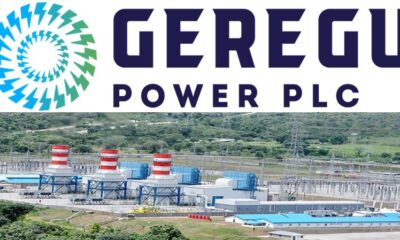
Geregu Power Plc has posted a profit after tax of ₦25.1 billion for the nine months ended September 30, 2025.
This represents a marginal increase from ₦24.19 billion recorded in the same period of 2024, according to its unaudited financial statements released to the Nigerian Exchange Limited (NGX).
The power-generating company, one of the few listed firms in Nigeria’s energy sector, maintained its earnings growth trajectory despite elevated financing costs, rising personnel expenses, and a heavier tax burden.
Profitability and Earnings Performance
Geregu’s profit before tax stood at ₦37.46 billion, up from ₦36.26 billion a year earlier — an increase of about 3.3% year-on-year. Profit after tax, however, grew at a slower pace due to higher tax expenses and increased interest charges.
The company’s earnings per share (EPS) rose to ₦10.04, compared to ₦9.68 recorded in September 2024, translating into a 3.7% growth in return per share for investors.
This consistent performance continues to position Geregu Power as one of the most profitable firms on the NGX’s main board, maintaining stability despite a challenging macroeconomic environment and persistent sector liquidity issues.
Revenue and Operating Efficiency
While revenue details were not disclosed in this segment of the report, Geregu’s cost structure suggests that the company is operating efficiently under its capacity utilisation strategy. Total personnel expenses rose modestly to ₦2.05 billion from ₦1.88 billion in the corresponding period of 2024, largely driven by performance bonuses, recruitment, and training costs.
Performance-linked expenses — including ₦628 million spent on bonuses, training, and recruitment — indicate the company’s effort to retain skilled staff and enhance plant reliability. However, this also underscores the growing burden of labour and contract manpower costs in the face of inflationary pressures and rising electricity generation costs.
The company’s continued commitment to operational excellence appears to have mitigated the effects of cost escalation, ensuring profit stability even as other generation companies struggle with payment shortfalls from the Nigerian Bulk Electricity Trading Plc (NBET) and gas-supply constraints.
Finance Cost and Debt Exposure
One major concern for investors is the company’s rising finance cost, which jumped to ₦10.07 billion in the nine-month period, compared to ₦7.33 billion a year earlier — a 37% increase year-on-year. The higher borrowing and bond interest payments outweighed gains from interest income, which stood at ₦5.3 billion.
This resulted in a net finance cost of ₦4.77 billion, up sharply from ₦753 million in the same period of 2024, revealing growing pressure on Geregu’s debt servicing obligations. The company’s capital structure, while robust, may require optimization as the cost of borrowing in the domestic market remains elevated following the Central Bank’s sustained tightening stance.
The sharp rise in interest expenses could reflect refinancing of prior facilities, increased working capital loans, or new financing tied to expansion or maintenance projects. While leverage can amplify returns, continued escalation of interest costs could erode future margins if not counterbalanced by revenue growth or cost efficiency gains.
Taxation and Fiscal Impact
Geregu Power’s total tax charge surged to ₦12.36 billion in the nine months to September 2025, up slightly from ₦12.07 billion in the previous year. The company’s effective tax rate climbed marginally to 33.33%, above the statutory 30% corporate tax threshold, due to non-deductible expenses and other levies.
This included an education tax of ₦1.12 billion, a police trust fund levy of ₦1.87 million, and deferred tax abatement adjustments totaling ₦943 million. The rising tax burden reflects Nigeria’s complex fiscal environment, where multiple levies continue to weigh on corporate profitability.
Geregu’s current tax liabilities also rose sharply to ₦32.33 billion from ₦19.97 billion, signaling substantial outstanding obligations. While this demonstrates the company’s solid earnings base, it also highlights mounting cash outflows that could impact near-term liquidity if not strategically managed.
Asset Quality and Impairment
A positive highlight in the 2025 interim report is the significant improvement in asset quality. The company’s impairment losses on financial assets declined to ₦4.74 billion, less than half the ₦10.15 billion reported in 2024. The reduction suggests better receivable management and fewer credit losses, a critical achievement in Nigeria’s power sector where unpaid invoices from distribution companies remain a systemic problem.
By minimizing impairment losses, Geregu freed up cash flow and strengthened its balance sheet — a vital development as the sector moves toward more stringent financial compliance and liquidity discipline under market reforms.
Shareholder Value and Outlook
At an EPS of ₦10.04 and steady year-on-year growth, Geregu Power continues to deliver value to shareholders. The company’s performance reinforces investor confidence in its ability to generate sustainable profit despite sector inefficiencies, volatile fuel supply, and regulatory delays in tariff adjustments.
However, the rising finance and tax costs warrant close attention. If unchecked, these could compress net margins in subsequent quarters, especially in a high-interest-rate environment. Geregu’s management will need to carefully balance expansion goals with capital efficiency, possibly exploring refinancing strategies or alternative funding sources to lower debt costs.
Going forward, investor sentiment around Geregu will depend largely on three factors: the company’s ability to sustain power generation efficiency, maintain disciplined cost control, and navigate fiscal and regulatory uncertainties.
As Nigeria’s first publicly listed power generation company, Geregu remains a barometer for the industry’s investment potential — and its 2025 interim results reaffirm both its resilience and the broader challenges confronting the nation’s energy market.