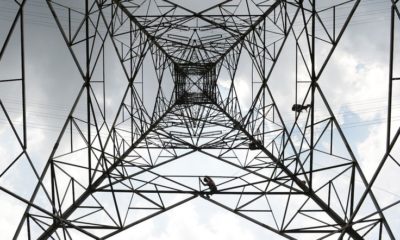
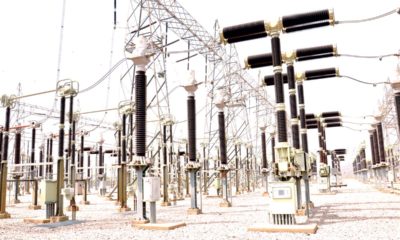
The Federal Government is in advanced talks with China’s Export-Import Bank to secure a $2 billion loan to fund the construction of a new national super grid aimed at addressing Nigeria’s chronic power transmission challenges and boosting industrial output.
Minister of Power, Adebayo Adelabu, disclosed this at an economic summit in Abuja on Monday, explaining that the proposed transmission line would connect the country’s eastern and western regions — the industrial hubs that consume most of the nation’s electricity supply.
According to Adelabu, the super grid project is a critical component of the government’s ongoing efforts to modernise the power sector, decentralise generation, and restore confidence among industrial consumers who abandoned the national grid due to persistent instability.
“It’s part of our strategy to decentralize power generation and bring back heavy commercial users who left the grid because of its instability,” Adelabu said.
Nigeria’s power sector remains one of the major bottlenecks to sustainable economic growth. Despite an installed capacity of about 13 gigawatts, the national grid consistently transmits only a fraction of that to serve over 200 million citizens, often suffering repeated system collapses.
In comparison, South Africa, with a quarter of Nigeria’s population, generates around 70 gigawatts of electricity.
Adelabu revealed that nearly half of Nigeria’s total electricity consumption now comes from self-generation, as companies and households increasingly rely on private generators and independent power solutions.
The new super grid, he said, would significantly improve transmission efficiency and deliver steady power to key industrial zones nationwide.
The Minister confirmed that the Federal Executive Council had already approved the project’s financing plan, describing it as one of the largest power infrastructure investments in recent years.
“This project will expand national transmission capacity, stabilise supply, and ensure that industries that have relocated from the grid return to it,” he added.
The initiative aligns with President Bola Tinubu’s economic reform agenda, which prioritises infrastructure renewal, fiscal discipline, and private sector participation.
Adelabu noted that reforms across key sectors — including fuel subsidy removal, foreign exchange liberalisation, and improved oil sector security — have begun to strengthen Nigeria’s economic fundamentals.
He added that the power industry is witnessing gradual financial stability, supported by tariff reforms introduced earlier in the year.
Adelabu disclosed that electricity tariff revenue rose by 70 percent in 2024, driven by new pricing models targeted at urban consumers, and is projected to grow another 41 percent to ₦2.4 trillion ($1.6 billion) by year-end.
“The reforms are working. The increase in revenue will enable reinvestment in infrastructure and improve liquidity across the value chain,” he said.
Analysts believe that the planned $2 billion facility from China’s Exim Bank underscores Beijing’s continued strategic engagement in Nigeria’s infrastructure sector, particularly in energy, rail and industrial projects.
The loan, if finalised, would further deepen bilateral economic relations while addressing one of Nigeria’s most persistent barriers to growth — inadequate power transmission.
The Federal Government expects negotiations with China to be concluded before the end of 2025, paving the way for the construction phase to commence immediately after financial closure.
If successfully implemented, the national super grid is projected to enhance Nigeria’s transmission capacity, reduce industrial energy costs, and provide a stable power backbone to support the country’s long-term growth objectives.