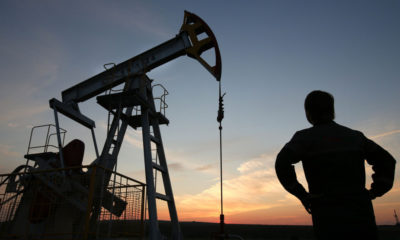
Nigeria’s active oil production rigs have climbed to their highest level in four years following targeted policy reforms and new regulatory frameworks aimed at revitalising the country’s upstream petroleum sector.
The Nigerian Upstream Petroleum Regulatory Commission (NUPRC) disclosed on Wednesday that the nation’s rig count has increased from eight in 2021 to 46 as of July 2025.
Gbenga Komolafe, Commission Chief Executive, announced the milestone in Abuja during the inauguration of a media workshop for journalists covering Nigeria’s oil and gas industry.
Komolafe attributed the steady rise in active rigs to the enactment of the Petroleum Industry Act (PIA) in 2021 and the commission’s ongoing efforts to boost crude oil output.
Rig count remains a critical benchmark for measuring the level of activity and vibrancy in the petroleum sector, serving as a leading indicator for drilling operations and investment trends.
Komolafe noted that the NUPRC’s Project One Million Barrels initiative, launched in October 2024, has already delivered measurable results.
The programme aims to increase Nigeria’s daily oil production by an additional one million barrels per day over time.
Since inception, the project has added about 300,000 barrels per day to national output, raising production levels closer to 1.7 million barrels daily.
The commission’s chief executive commended President Bola Tinubu for signing Executive Orders 40, 41, and 42, which have provided fiscal incentives, strengthened local content participation, and improved cost efficiency and contract timelines.
“These Executive Orders have attracted billions of dollars in new investments through Final Investment Decisions (FIDs) and have redefined Nigeria’s contracting cycle and fiscal framework in ways that benefit both investors and the country,” Komolafe said.
The NUPRC also stressed the importance of accurate and responsible media coverage, urging journalists to help the public better understand the commission’s role as an independent regulator rather than an industry operator.
“As a regulator, our mandate places us in a quasi-judicial role to mediate and ensure compliance across the upstream value chain. It is an omnibus job that requires trust and professionalism from all stakeholders,” Komolafe added.
The latest increase in Nigeria’s rig count comes at a critical time when global energy markets remain sensitive to supply dynamics from major producers.
Industry analysts see the rise as a signal of gradual recovery in Nigeria’s upstream operations, driven by clearer regulations and improved investment incentives.
The commission reaffirmed its commitment to sustaining policy measures that enhance production capacity and secure the nation’s position as a leading crude exporter within OPEC.